
On 28th September I attended a flax processing workshop at the Rural Life Museum in Farnham, run by the Let’s Grow Flax community. I’ve been to the Rural Life Museum a few times before with my family, it used to be just down the road from us when we lived in Ash Vale. We actually loved it – it’s full of cool old stuff and loads of space for the kids to run around in. Now we are in Andover it is a bit further to travel too, but still only about an hour.
The weather was damp and drizzly – as a result there were not many people at the museum that day. Our group for the workshop was situated outside but under cover in the laundry house.
I was keen to attend a flax processing workshop in person. I had been watching the online webinars that the Let’s grow flax group provided. But I think before I tried processing my own flax, I wanted to actually try and process some flax with my own hands, to get a feel for it.
Brigitte, who runs the group, started the workshop by asking us to briefly introduce ourselves. There were 6 other attendees on the workshop, all from relatively local places. Brigitte then briefly explained the harvesting and retting process, showing us the difference between fully retted and under retted flax. Then she moved on to the tools and methods to process the flax.
The first stage is called breaking, and the flax stalks are literally broken up. This can be done with a breaker, which is like a hinged wooden device which crimps the flax. The breaker makes a very satisfying cracking sound when brought down on a bundle of dried, retted flax. The hard woody inner part of the flax begins to fall away and the bundle begins to soften, until you can wrap the bundle around your wrist to keep it together.
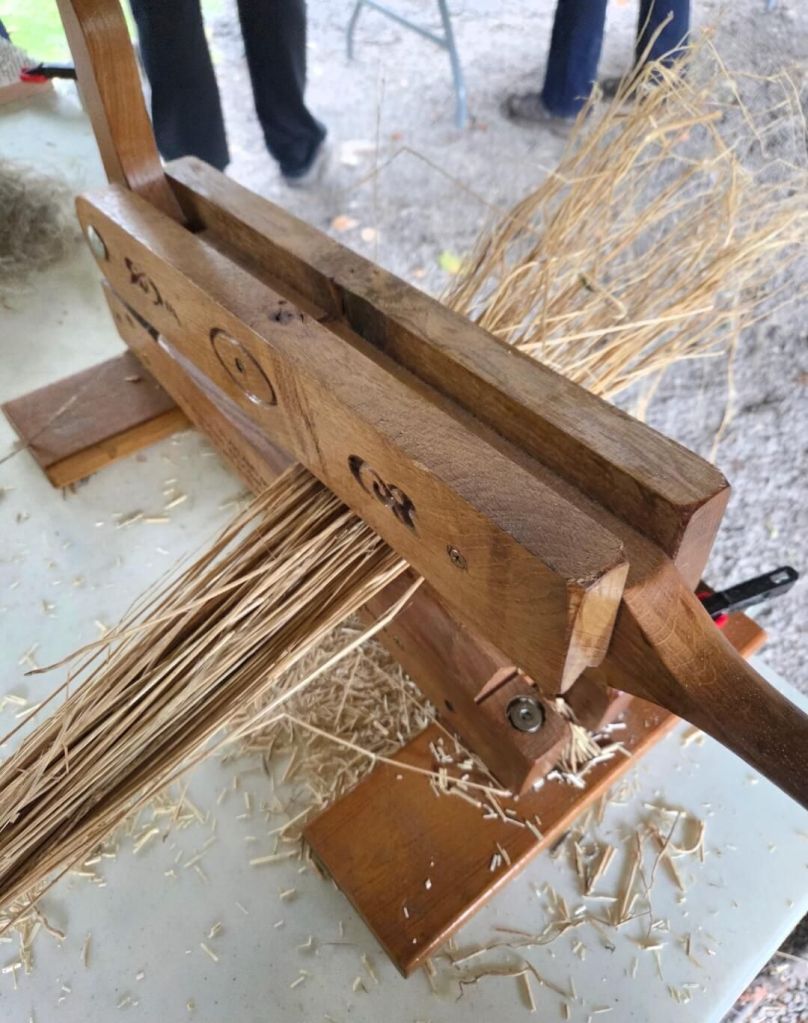
The next step is scutching. This is where you hold the flax against a wooden board (or your own body) and scrap the flax with a wooden dowel or knife. This helps to further remove the woody part until all that is left is the soft fibres.
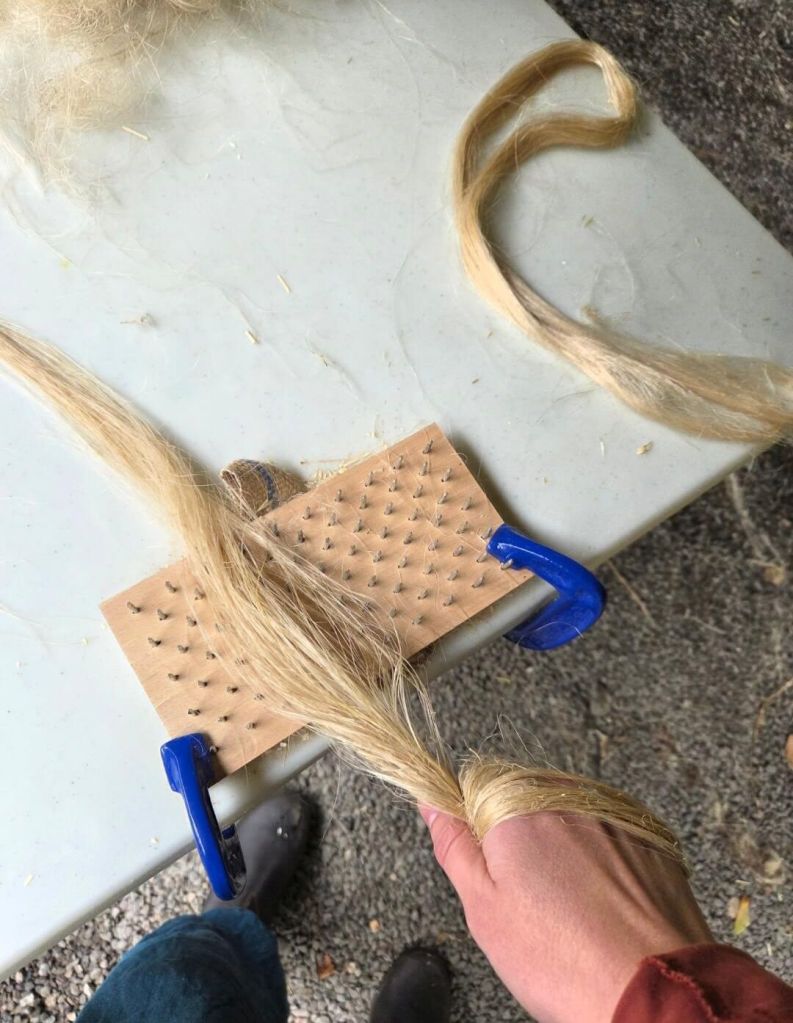
Once all the woody parts have gone,the third part of the process is hackling. This involves passing the flax fibres through a series of combs, to untangle and align the fibres.
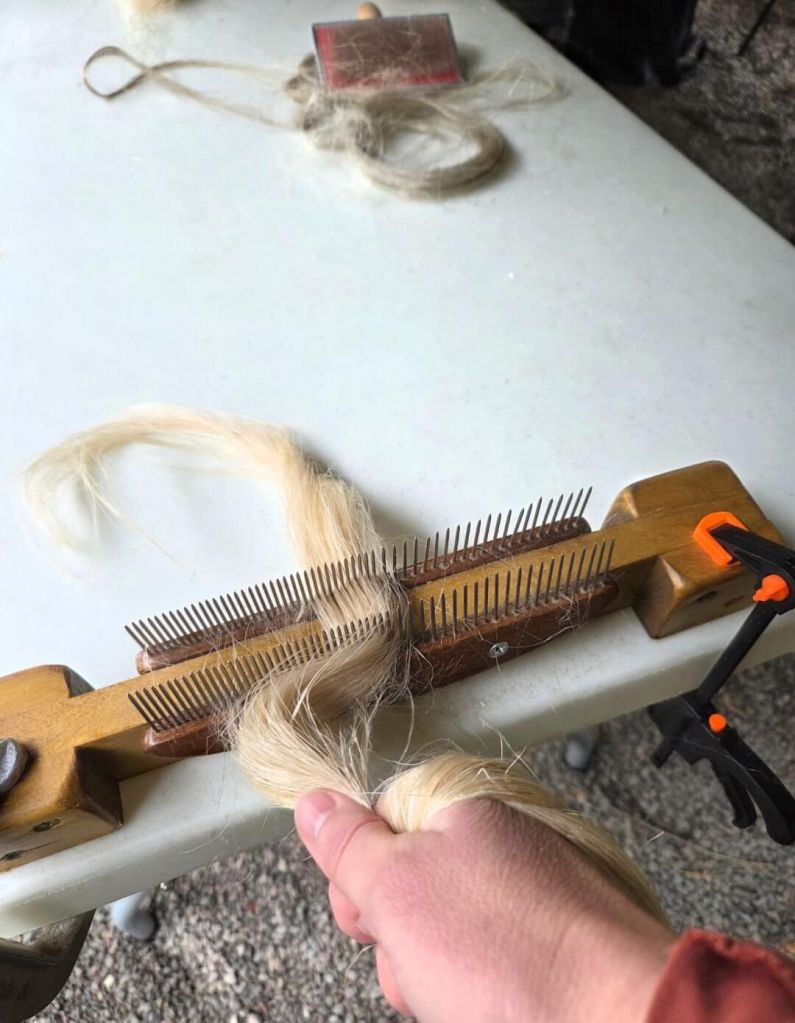
Finally the finished bundle is twisted and stored to be spun at a later date.
Brigitte had brought along some flax for us to practise on. The first few bundles I processed I got into a bit of a mess with – its very easy for the flax to tangle and knot if you are not careful. But after I while I started to get into the flow of things, and the hackling park felt much more familiar as it was not that dissimilar to combing wool.
I had brought along my own homegrown flax, but alas it was not retted enough to process, so I took it home again to rett for a while longer in the garden.
I spent around four hours at the workshop, but it went so much quicker as we were all so deep in concentration.
I came away feeling much more confident for the next step of processing my own flax. I purchased a small kit from Brigitte as well, comprising of a metal comb and wooden dowel which should be adequate for processing smaller amounts of flax.
 Emery Smith Studio
Leave a comment