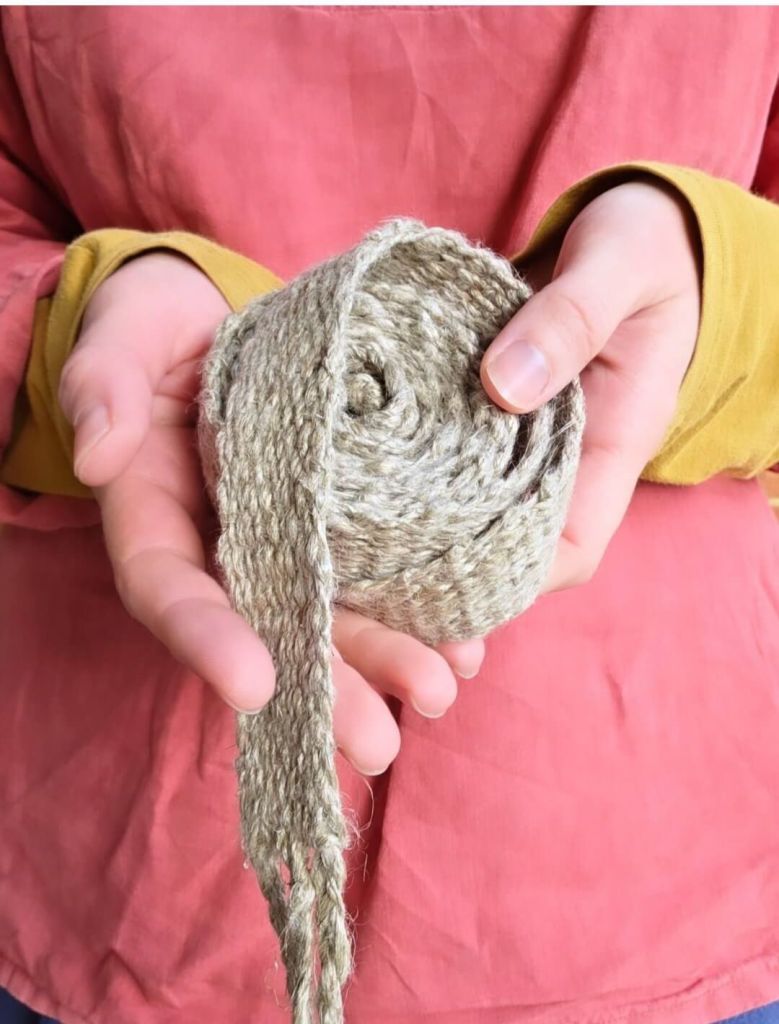
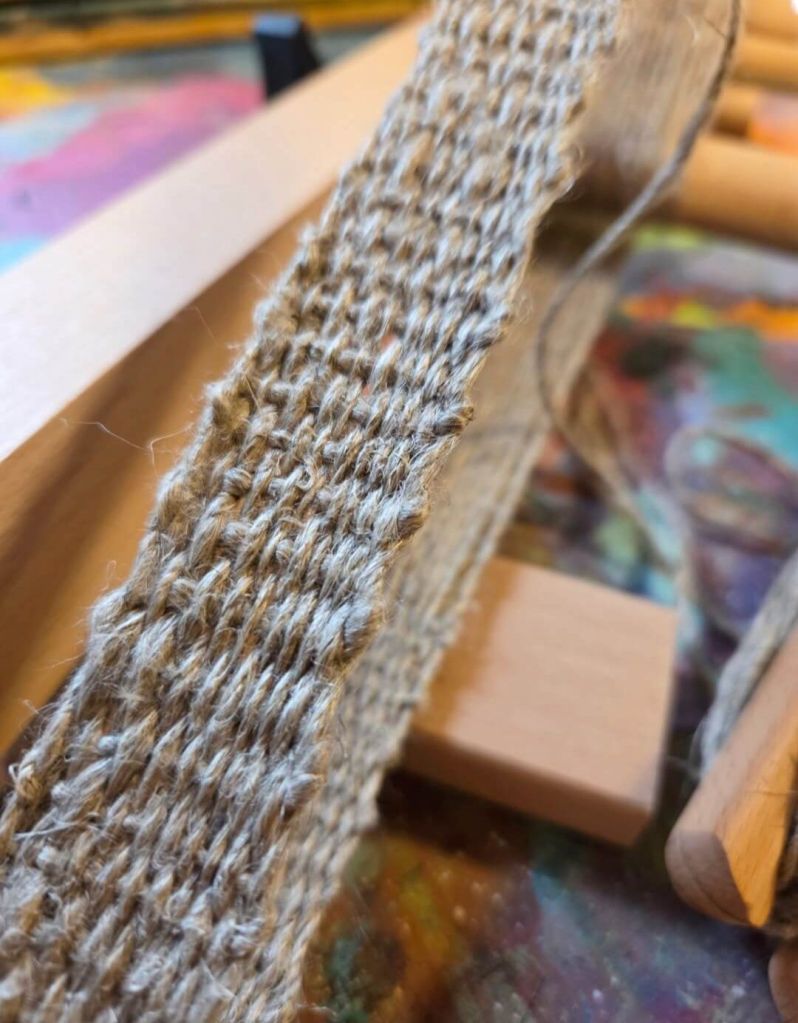
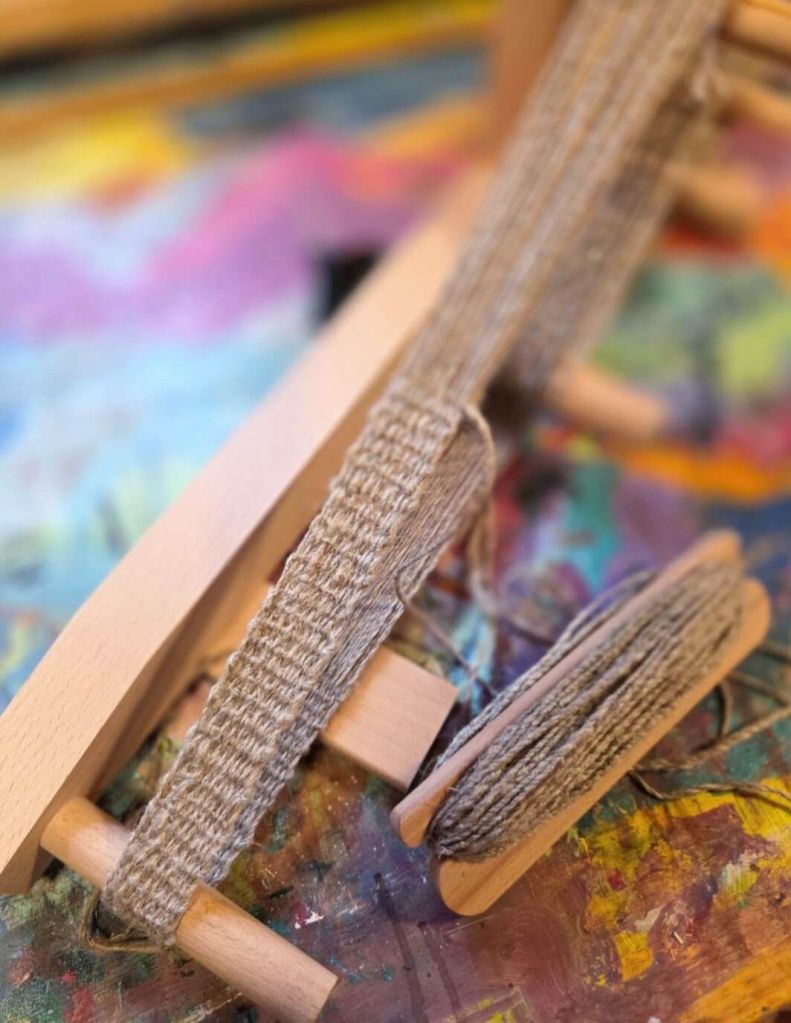
With the leftover yarn after finishing my belt I was able to weave a little coaster too. It’s a bit rustic but softer than it looks. Eventually I’d like to be able to grow enough flax to make a item of clothing, wouldn’t that be amazing. Hopefully I will be better at spinning a more consistent yarn by then too 🙂
I grew my own fabric! I can’t quite believe I’ve made a belt out off something I grew in my own garden. Eight months of sowing, growing, harvesting, retting, processing, spinning, and weaving and this is the result. I really wanted to turn my first linen yardage into a useful item, so I decided upon weaving a belt on an inkle loom. I got started right away once I’d finished spinning. My yarn was on the chunky side so a thick belt suited it perfectly.
I am hooked on flax now – I have loved the whole process and hope to repeat it next year. Thanks to Lets Grow Flax who have been my guide throughout!
(I will write something longer about my experience one day! For now let me just say that I’ve found there’s deep satisfaction and connection that comes from learning traditional skills, being resourceful, working with nature and producing things with your own hands. Sometimes I think it doesn’t do us humans any good to have everything so quick and easy all the time)
A new winter hat for my littlest one. She gets a lot of hand-me-downs, being the youngest, so I like to create new things just for her every now and then.
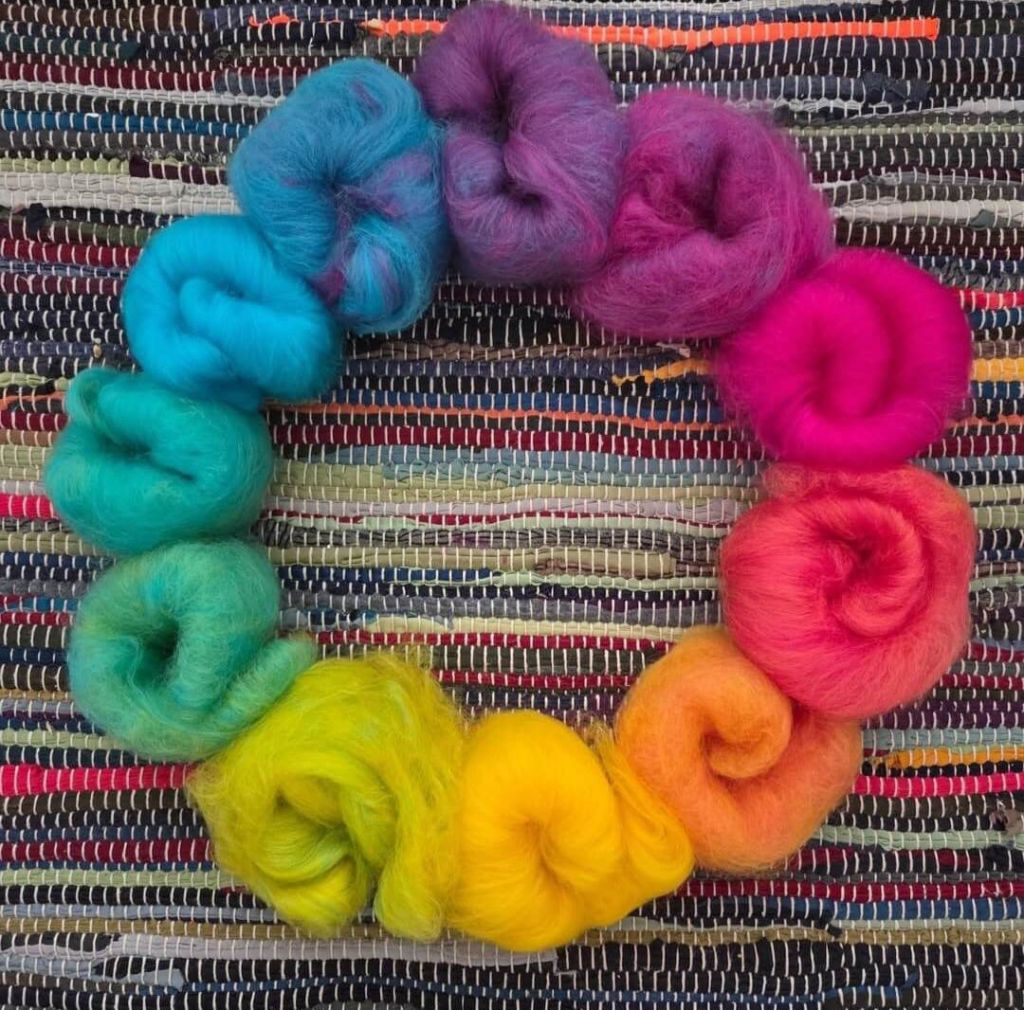
This was a simple crochet design using my own chunky handspun wool. I created a rainbow yarn using just three colours of fibre, blending the colours together in various quantities to achieve the range of colours in a colour wheel. (You can blend wool colours just like paint!)
Then spun on my spinning wheel and plied with white before crocheting. I think it turned out super cute 😍
To process my flax at home, I used the mini kit I purchased from Brigitte at Let’s Grow Flax consisting of a metal comb and square wooden dowel.
The first step is breaking. I took small bundles of flax and bent them around the dowel at regular intervals to break the stem. This I repeated up and down the stalk until the flax became more flexible and I was able to wrap the bundle around my hand to secure it.
The next step is scutching. I held the flax bundle against my leg and scraped the dowel along the stems. This causes the woody parts to start falling away and I repeat the process, shaking out the woody pieces until there are none left. I had to use my fingers to pick out the more stubborn pieces.
Then I started combing the flax, using the metal comb. Feels just like brushing my daughters tangled hair! Once the flax passes through the metal comb easily, I then pass it through a hand carder. This separates and aligns the fibres.
The resultant long lengths of fibre is called line fibre and is considered the best quality. The shorter pieces which are left in the combs can be removed and combed again. The longer lengths are called rehackled line fibre, and the shorter pieces are called tow fibre.